Music, AI and Me – The Triple Threat
“The record you didn’t know you needed is what I am listening to in the other room.”
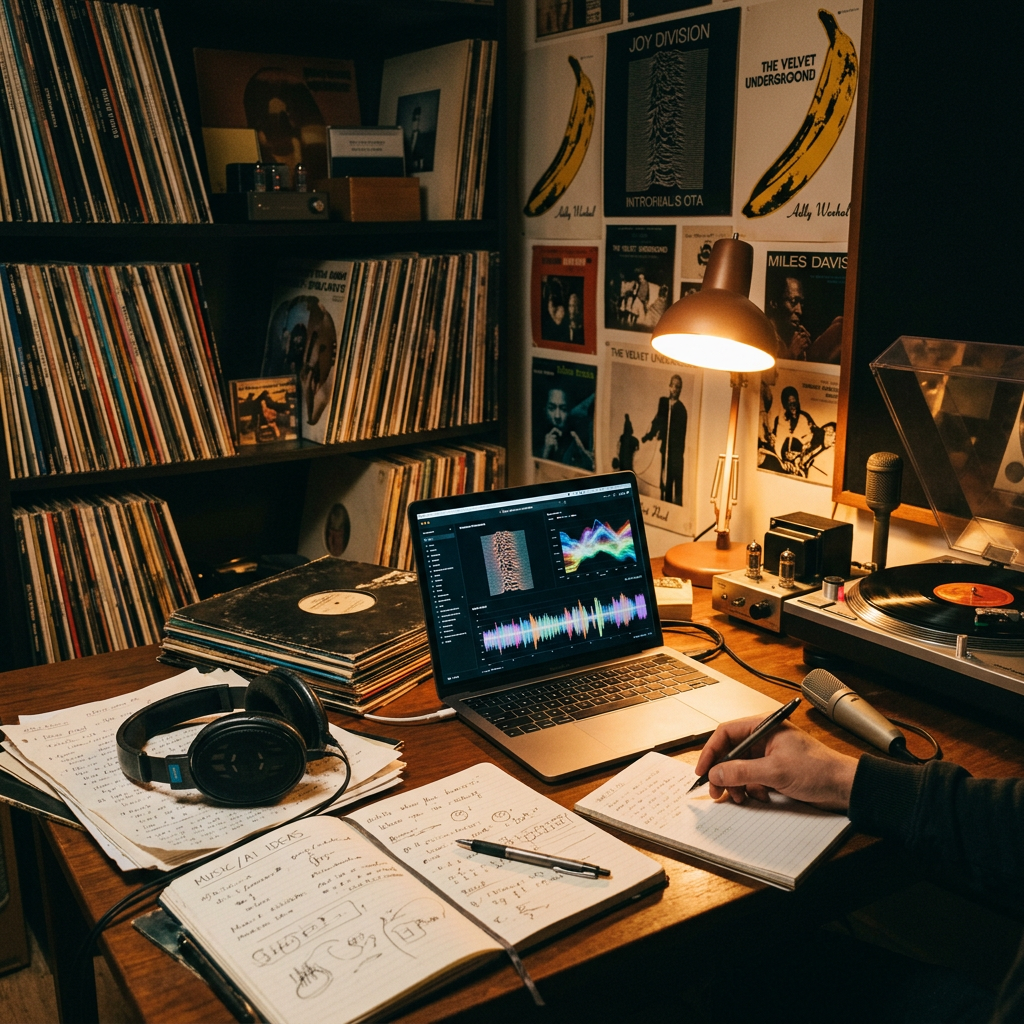
I have always been a naturally curious person with a voracious appetite to learn new things. With the onset of AI being a part of everything, of course I was intrigued and wanted to learn about and understand what it was capable of.
I have always found that the best way for me to learn something is to use it for an actual project, to build or do something for myself. Theoretical learning has never worked well for me, I’ve got to get my hands dirty.
I also love music, some might say even an obsession, so it shouldn’t be surprising that I have been using AI (specifically Claude) to integrate with that love to build some really neat things. I thought I would share some of this work with you.
First I built Scrobble Analyzer – Scrobble Analyzer is a single page open source tool to help Last.fm users find messy metadata errors in their libraries. I have been a scrobbler for over 20 years and this has helped me and dozens of others clean up their listening history so that it is consistent and accurate. You have no idea how dirty your data is until you run it through Scrobble Analyzer. As I always say, clean scrobbles are happy scrobbles.
Then I completely redesigned my blog – For Sensory Dispensary, I really wanted the theme and style to reflect and better represent the music content I was already providing. I started with WordPress’s fascinating but now retired Telex to build a theme and some custom blocks, and then Claude Code and I did the rest. A full start from scratch rebuild so I had exactly the place I wanted to post and share.
I automated my Bin Diving posts – Bin Diving is a weekly wrap up of the full albums I had chosen to listen to during the previous week. It was a great idea and I had a custom block to present it beautifully, but it was tedious and time consuming to generate. Now I just log some basic information and my brief review into a custom Capacities object and Claude does the rest. He retrieves the album cover images all named and properly formatted, generates a Squigli link so anyone can listen, puts all that information in to a new post set to draft. I write my own introduction and an excerpt, and pick out a featured image (all things I want to do, not something for AI to decide or write for me) and hit publish. What would have taken me hours each week is now about 10 minues of logging during the week, then 5 minutes of proofreading and some finish work when I am ready to post.
I created my own personalized custom Liner Notes – I have always thought of my 20 years of last.fm data as being analogous to the story of my life during those years. What I listened to and when, and why. I knew it was full of information, patterns of discovery and abandonment. So I built Liner Notes, a tool that digs deep into my listening history and tells a story from it, a story I didn’t really know until I read it. I hope you’ll read it, I found it fascinating.
Bringing WSMB Radio Online – Now that I have relatively clean listening data and a way to process that data and look for patterns, I am working on my next thing, WSMB – my own custom radio station. It goes through my history when I run the prompt and finds songs in 4 different categories:
It generates a slate of songs that fit these buckets as taken from my last.fm library and then generates a roughly 3 hour playlist on Spotify. It runs through the list and organizes the songs into a pleasant sequence which does things like split out similar artists from grouping to prevent the infuriating Spotify tendency to do things like play Wilco, Uncle Tupelo, Son Volt, Jeff Tweedy solo, Golden Smog, one or two other songs, and then repeating the Wilco… sequence again.
This is a young project, and is still very much a work in progress, but the results are already impressive, and really enjoyable.
We are still working on the ratios between the categories and tweaking the way it tries to transfer the Track / Artist detail from last.fm to a specific song on Spotify, but we’re getting there. I just added a cooldown period so that it will hold off on repeating the same tracks again too soon. Next up is to add MusicBrainz integration so that the Adjacent search can take into account band personnel when making recommendations.
If you want to give a listen, you can find the WSMB Playlist here. Note that I refresh it often so I have no idea what you will find when you get there and it will likely be different should you go back again. Be sure to favorite anything you like so you can find it again.
This is what I am working on now that I can share. I have another project still in the very early stages that re-thinks what musical compatibility is between two different listeners, what each can gain from the other in terms of discovery, and hopefully a method to present that information in a way that facilitates recommendations, connections and dare I say friendships, with people who love music as much as you do. Stay tuned!
Let me know if you have any questions about any of the above work, or are interested in using any of these tools for yourself, and we’ll figure out how to make that happen. As mentioned, Scrobble Analyzer is already directly available on github for you to use, with instructions and a more detailed explanation of features. If you use last.fm, you’ll definitely want to take a look at it.



The Conversation